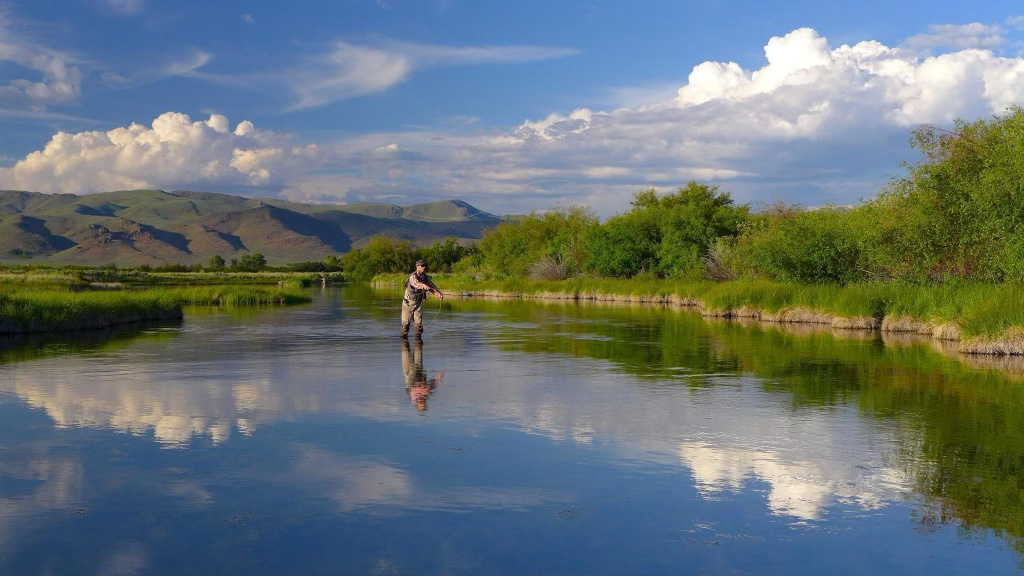
Photo by: Bob Knoebel
“Our senses exist mainly to refine, or error-correct, our minds’ best guesses as to what we’re experiencing.”
– Michael Pollan
Every cast is a prediction, a question seeking resolution. The standard operating mode of a persistent angler is guess-adjust-guess-adjust. A refusal means you got it slightly wrong. Adjust again: the fly, tippet, drift, until…the loop never stops.
Silver Creek
Like all the other hatches this season, the Tricos are early. At the moment, the hatch is very brief, but it should continue to build as we head into the second half of July. If you do see the white-winged curse in the early morning sky, the spinners should hit the water when the air temps are around 60 to 65 degrees. Before the spinners come down, the fish will be looking for the occasional female Trico Dun, Callibaetis spinner, PMD spinner, or Baetis spinner. The fish are very selective during the hatch and anglers need to have a variety of patterns to stay in the fish as conditions change. Also long, light leaders are a must. Once the hatch wanes, blue damsels and Callibaetis are a good option. Hoppers, ants, and beetles may get blown onto the water on windy days and nymphing is also productive.
The Big Wood
The flows are still pushy below the Warm Springs confluence, but most all the river is open to strong waders and with the current air temperatures, the wet wading is refreshing. Fishing has been solid in the mornings with plenty of Caddis, Grey Drakes, Rusty Spinners, Baetis, PMDs, and Pink Alberts around. Fish the seams of the fast water and buckets with small (16 and 14) parachute patterns or caddis imitation. Try dry dropper rigs in the shallow riffles at the head of the runs to find fish as well. Please pay attention to water temps as the lower river is getting low and warm in the afternoons.
Big Lost below Mackay
At 428 CFS, strong waders can move about; that said, it is still very high and difficult to cross. There are good morning hatches consisting of a mix of PMDs, Beatis, Craneflies, and a few Tricos. Nymphing remains the most productive with a variety of different small nymphs.
Upper Big Lost
The East Fork is experiencing a lot of pressure; however, the lower flows have opened up more water below the Wildhorse confluence and on the main stem. Big drys will turn fish, but if you get a refusal, switch to a smaller, more pattern. If that does not work, small nymphs may work as well. As always, success comes to those who cover a lot of water.
Salmon River
The fishing on the Upper and Lower Salmon is good. There are still fair numbers of Golden Stones and Yellow Sallies in the morning and the Spruce Moths should be making an appearance any day. Whether you decide to float or hole hop in your vehicle, this is a great way to spend the day.
South Fork of the Boise
The Salmon flies are done; however, big foam bugs with a dropper are still effective for working the banks while floating. Pink Alberts have also begun so pad your box sure with duns and emergers. Caddis remain a factor as well in the evenings and you should pack a good selection of Trailing Shuck Caddis. Nymphing the riffles and seams is also productive for both trout and whitefish.
Local Ponds
Lake Creek, Penny Lake, and Gaver’s Lagoon have been stocked and will receive regular stockings throughout the summer season.
Silver Creek: Baetis 20-24 | PMDs size 14 | Callibaetis 16,14 | Tricos | Damsels | Terrestrials | Zebra Midge in black, red, or olive | Small Pheasant Tails | Streamers
Big Lost: PMDs size 16 | Yellow Sallies | Golden Stones | Baetis 18,20 | Midge 20-24 | Streamers
Big Wood: Green Drakes | Caddis | Golden Stones | Chubby Chernobyl | Rubber Legged Stones | King Prince | Streamers
Salmon: Chubby Chernobyl | Rubber Legged Stones | King Prince | Streamers
Southfork of the Boise: Stoneflies | Baetis | PMDs | Midge | Rubber Legged Stones | King Prince | Streamers
| Silver Creek | 103 cfs |
| Big Wood | 327 cfs |
| Big Lost Below Mackay | 433 cfs |
| South Fork of the Boise | 1580 cfs |
| Salmon | 894 cfs |